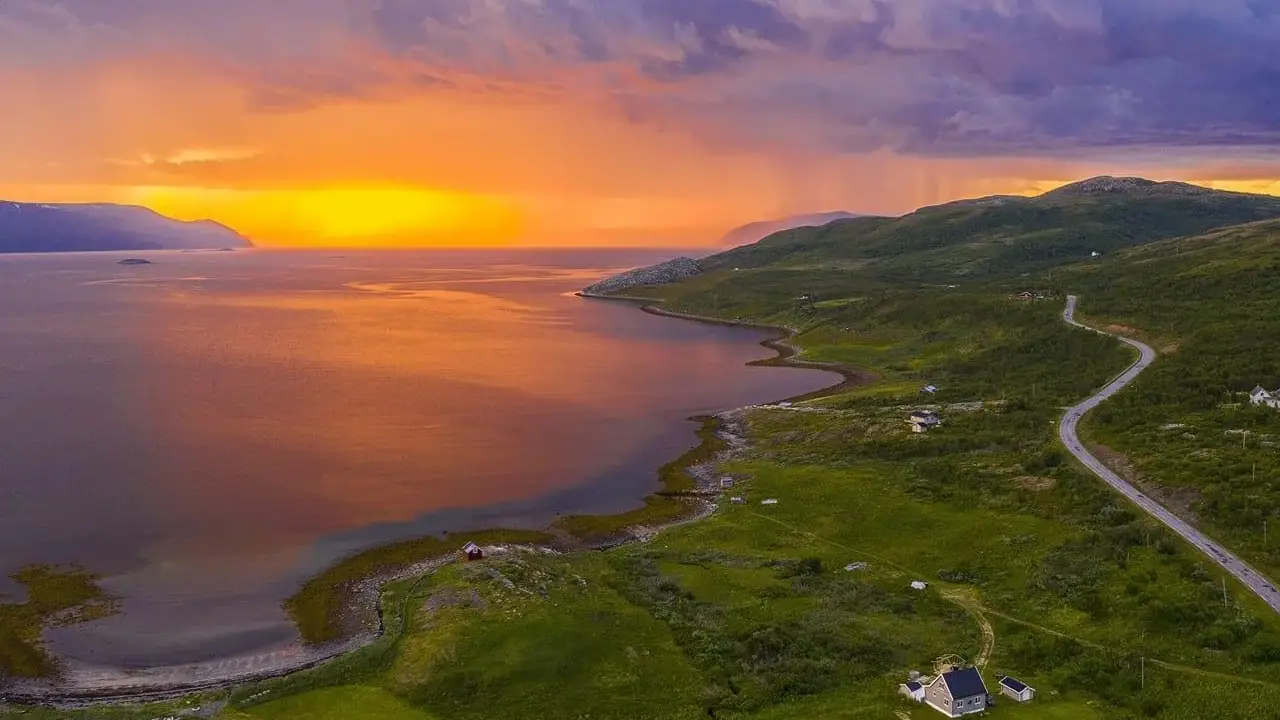
Photo: Frank Martin Ingilæ
For salmon, the fjord is not the main habitat Norway has many fjords that are several hundred meters deep. Small Salmon that are on their way to the ocean, and adult salmon that are on their way back to the river where they were born, use only the top meters. The water here is often brackish water.
Norway has many fjords that are several hundred meters deep. Small Salmon that are on their way to the ocean, and adult salmon that are on their way back to the river where they were born, use only the top meters. The water here is often brackish water. That is, it is less salty than the water in the ocean, and more salty than fresh water. The water temperature and salinity of the water can vary from year to year and from fjord to fjord. The surface water in the fjords is quite similar throughout the year — if we compare with the conditions in the watercourses.
The small salmon (the smolt) migrate out in the spring, wearing camouflage adapted to marine life. They have dark backs and glossy bellies — almost like a herring. The dark back makes it difficult for fish-eating birds to see them as they swim across deep and dark fjords. Its light belly and light sides camouflage it against predatory fish coming from below and looking up at the bright water surface.
The smolt stays only a few days in the fjord. They purposefully swim out towards the open sea. The main food for smolt in the fjord is fish fry. Adult salmon that are on their way to their birth river to spawn, rarely stop to eat in the fjord.
The fish farms along the coast have a thousand times more fish than we have wild salmon. It likes the parasite salmon lice. Salmon lice infect from farmed salmon to wild salmon and can injure and kill smolt on their way out to sea.
Parliament has granted the wild salmon special protection in 29 fjords. We call these national salmon fjords, and salmon farming is not allowed here. Tanafjorden and Namsenfjorden are two such national salmon fjords. You can read more about national salmon waterways and fjords here.
Vann består av en liten del salt (NaCl) i tillegg til molekyler sammensatt av to hydrogenatomer og ett oksygenatom. Andelen salt kan variere fra mindre enn 0,5% (ferskvann) til 3,5% (sjøvann). Salt gjør vann tyngre.
På jordoverflaten er det ofte et tynt lag vann med lite salt. Det er en blanding av sjøvann og ferskvann. Dette vannet kaller vi brakkvann. Lenger ned er det "rent" sjøvann.
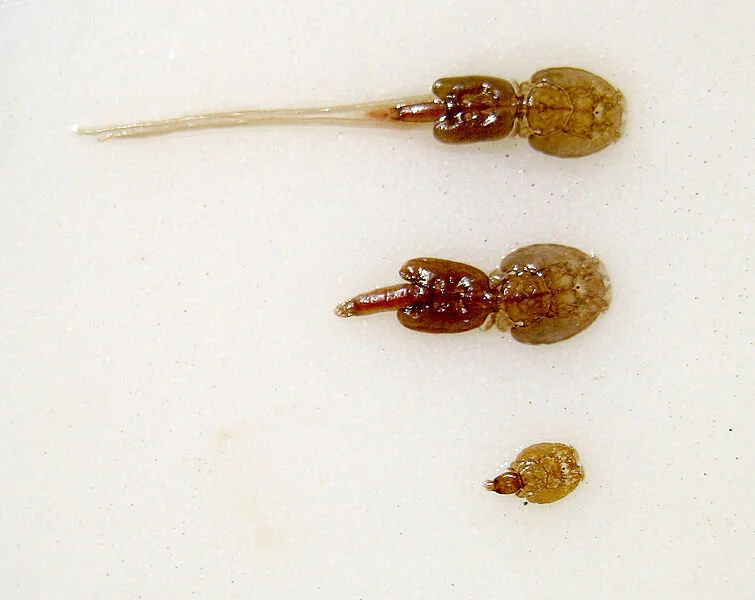
Top: adult female with egg strings. In the middle: adult female without egg strings. Bottom: young louse. Photo: Thomas Bjørkan, Norwegian Aquaculture Centre, Brønnøy.
Lakselus er et krepsdyr som lever på laksefisk (laks, ørret og røye). Den trives dårlig i ferskvann og ramler derfor av laksen i elva. Hvis laksen i elva har lakselus, tyder det på at den nylig er kommet fra havet. Forsøk i laboratorium viser at lakselus kan overleve på fisken i opptil 14 dager i ferskvann.
Kvåsveien 1500
4588 Kvås - Lyngdal
Org No. 915 380 972
The wild salmon is a part of our history and culture.
.png)